
 Back
Back


About this episode
Exploring the RNLI with Alun Pari Huws
In this episode, Juana Eastwood speaks with Alun Pari Huws, the Launch Authority at the Llandudno Lifeboat Station, about his journey with the RNLI and the evolution of the organisation since its founding in 1824. Alun shares insights into his role, the significant changes in lifeboat technology, and the RNLI’s mission to save lives at sea.
Listeners will learn about the training and commitment required from RNLI volunteers, the impact of community engagement in water safety education, and the importance of public support in sustaining the RNLI’s operations. Alun’s passion for the RNLI shines through as he discusses the organisation’s values and the vital role it plays in maritime safety.


In this episode
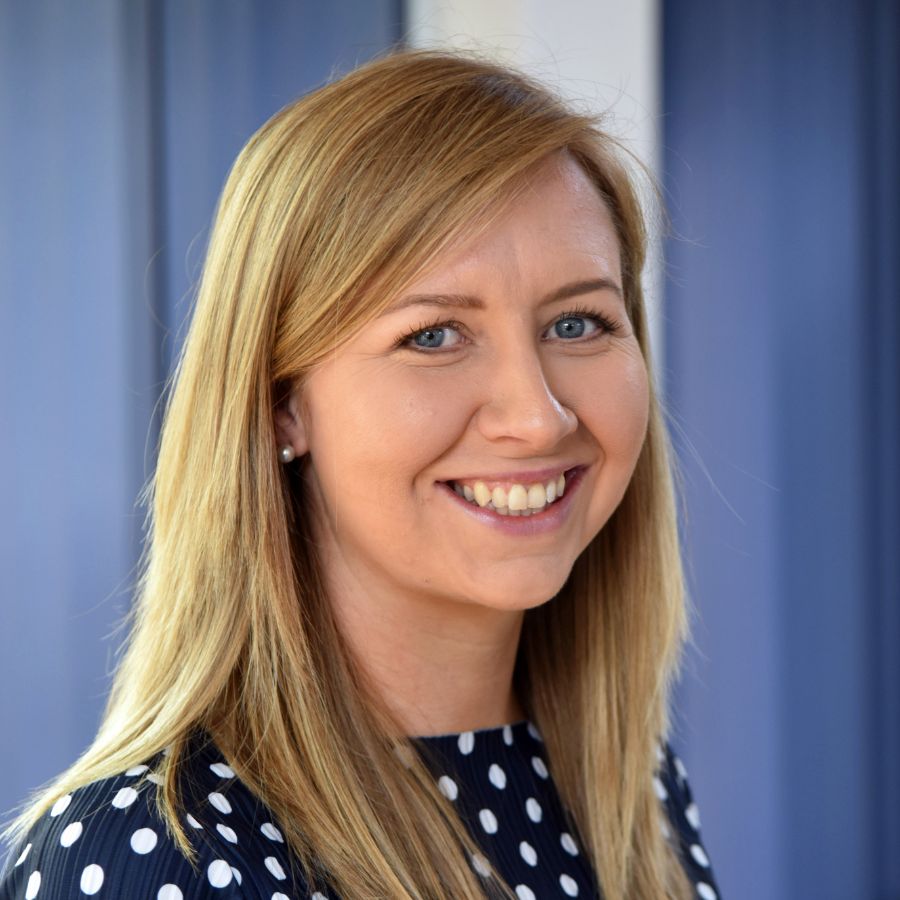
Juana Eastwood
Juana works closely with our Corporate Department dealing with the sale and purchase of commercial property and businesses, such as hotels, B&Bs and caravan parks. She has experience dealing with the leisure and tourism industry.
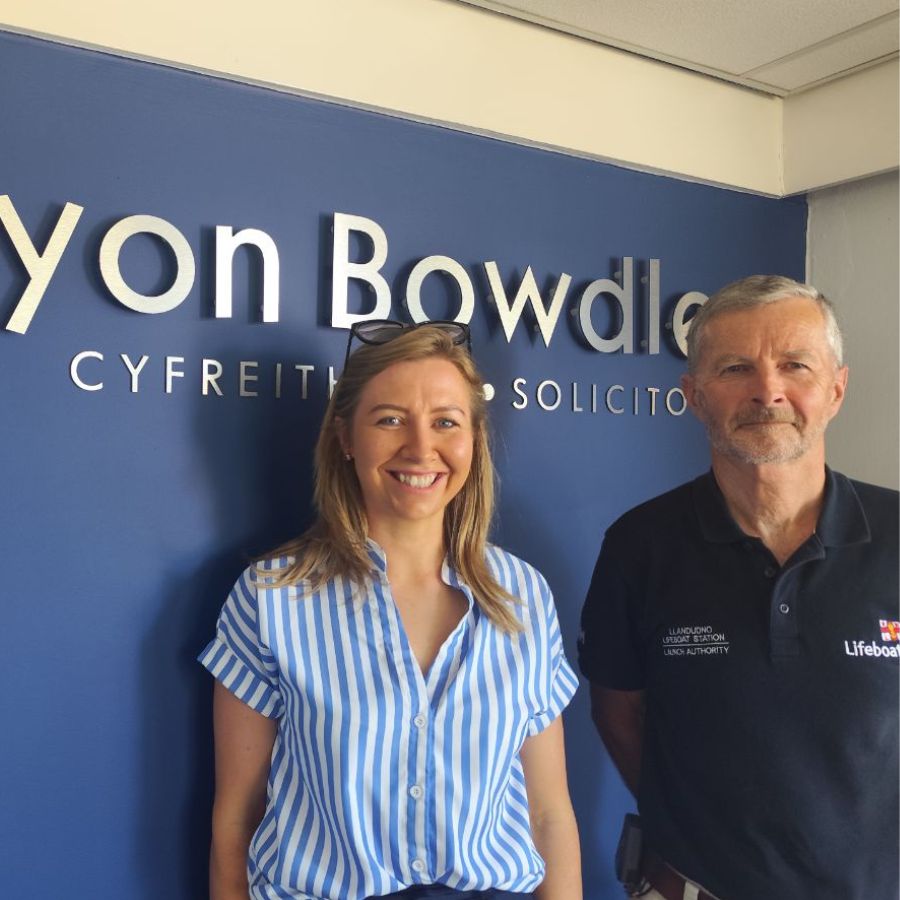
Alun Pari Huws
Alun is a Launch Authority with the RNLI at Llandudno Lifeboat Station.
Podcast transcription
[00:00:00 – 00:00:13] Introducer: This is The Legal Lounge from Lanyon Bowdler Solicitors, where you’ll hear about many aspects of law in England and Wales, with special guests, industry experts and local charities. Here’s your host, Amanda Jones.
[00:00:13 – 00:00:50] Amanda: Hello and welcome to the Legal Lounge where we now release new episodes every Monday.
[00:00:50 – 00:01:02] Juana: Hi, I’m Juana Eastwood and I’m here today with Alan Pari Huws from the RNLI. What inspired you to become involved with the RNLI and how has your background influenced your work?
[00:01:01 – 00:01:33] Alun: I had a trip on the lifeboat when I was 18, not the kind of thing that’s done these days. So that’s exactly 50 years ago. And my father’s a master mariner by profession. So the sea, maritime history, ships, boats, they’ve always been a part of life. And I couldn’t go to sea. It could occur due to an eyesight issue, but I guess my career in banking has certainly helped with the leadership and the management and the organisational team working and the administrative aspects of the role that I do at Llandudno Lifeboat Station.
[00:01:32 – 00:01:40] Juana: I understand your role is that at the launch authority. Could you please explain to us what the role of the launch involves?
[00:01:39 – 00:02:50] Alun: Yeah, that’s quite an interesting question because I’ll tell you what the… The core part of the role involves, although in time terms. It doesn’t take up a huge percentage of the total. So the core role is that if my pager, and I have turned it off, if my pager rings and I’m on duty as a launch authority, it’s me or the duty launch authority who rings the Coast Guard to find out what the problem is. We ask them pertinent questions because before we accept what we call a tasking, we have to be happy that what we’ve been asked to do is appropriate. It’s unachievable and compliant. And if we’re happy, then we will authorize the launch of one or other of the lifeboats and then the crew are paged and then we need to explain then to the helm, if it’s inter lifeboat or the coxswain of the all-weather lifeboat, what it is that we’re asking them to do. And if they’re happy with that information, then we launch the boat. And then a longish RCT is just sort of keeping an overview of what’s going on while the operation is underway and then afterwards there’s the inevitable paperwork. So we have quite detailed reports which are written up and on occasions the reporting takes longer than the service did, particularly for quick rescues that are done by the inshore lifeboats.
[00:02:49 – 00:02:50] Juana: Yeah,
[00:02:49 – 00:02:50] Alun: So that’s
[00:02:49 – 00:02:50] Juana: that’s
[00:02:49 – 00:02:58] Alun: the core part of the role but it’s a management role so we’re very much involved with the management of the station and in doing various sort of odd jobs, that’s the core bit of it.
[00:02:57 – 00:03:10] Juana: quite. That’s quite similar in terms of the roles that quite often our paperwork takes a lot longer than the actual task itself will be advice. So what do you find most rewarding about your role and what keeps you motivated?
[00:03:09 – 00:03:42] Alun: Well, I think it’s knowing that we help people. and occasionally truly knowing that we saved a life. And motivation is an interesting question because it’s a big commitment, but I am motivated by this long-standing interest in the army life that goes back, you know, literally half a century. I guess also for me there is a desire to be professional or at least try to be in all I do in life. And like most people I want to make a contribution, but I guess you’ll probably get a range of answers from a range of volunteers because motivation… motivation is very much a personal thing but those are the key things for me.
[00:03:41 – 00:03:46] Juana: How has the RNLI changed since its founding in 1824?
[00:03:46 – 00:06:15] Alun: That is a really interesting question to answer because I was born in 1958 and the RNLI was founded in in 1824 so If I think about that period, that 130, 140 years, and I think about really, really significant developments apart from the general development of lifeboats and experimenting with different classes of boat and so on, there are really only three. And the first is the introduction of life jackets in 1855, the introduction of power, so not just relying on men and oars and sail. From about 1890. And the other significant thing for me is introduction of radio on lifeboats, which didn’t happen until almost 100 years ago. And all of these things took time. If you think about the change from power, for example, from sail and oar to power, that started in 1890, but the last pulling and sailing lifeboat didn’t leave the service until 1948. The last rowing lifeboat didn’t leave until 1957. So we’re talking about quite a long transition and even the introduction of radio took two or three decades to become common throughout all boats. So you get that first long period where there is evolution and there is change but nothing hugely fundamental. And then we come to the late 50s early 60s and from then we’ve seen massive change. So we moved from purely wooden lifeboats, we moved to… steel and aluminium and GRP and then now fibre reinforced composite. We have the introduction of the internal lifeboats in the early 1960s that was new a small boat that you could launch with two or three people a boat that was at least double the speed of the old weather lifeboats that they only had up to that point. We moved to lifeboats with fully enclosed wheelhouses, huge increase in technology. a move slowly towards all life at being able to do at least 25 knots, that’s nearly 30 miles an hour, and that’s a vast difference from 100 years ago. We have a significantly improved safety record, you know there being no lives lost in the our life since 1981. That’s a terrific record, some accidents but no lives lost. And I think also significantly a move to prevention as opposed to just going out there and pulling people out of the water. There’s been a move to slowly educate people and help them understand. The dangers of being on the water in the first place. So I think there’s been three, four, five times as much change in my lifetime than there was in the first 130, 140 years, if that makes sense.
[00:06:14 – 00:06:20] Juana: There was an open day at the lifeboat station last year in Llandudno and
[00:06:19 – 00:06:20] Alun: There was.
[00:06:19 – 00:06:29] Juana: that was the first time that I’d sort of had a bit of an insight of I couldn’t actually believe like the technology and the equipment on the boat like to
[00:06:28 – 00:06:29] Alun: Did
[00:06:28 – 00:06:29] Juana: it.
[00:06:28 – 00:06:29] Alun: you go on the boat?
[00:06:28 – 00:06:30] Juana: Yeah. They
[00:06:29 – 00:06:30] Alun: Yes.
[00:06:29 – 00:06:36] Juana: showed, like it was inside in the station, but I couldn’t believe the setup and what goes on.
[00:06:35 – 00:06:53] Alun: I do quite a lot of tours as to my visitor steward colleagues. I take quite a lot of people on the boat and have done so. And it’s if they get the opportunity to go in the wheelhouse and we can’t do that for everybody. But if there’s an opportunity, that’s a bit that blows them away because people are used to seeing a film of a lifeboat with a coxswain standing at an open wheel
[00:06:54 – 00:07:04] Alun: a spray blowing and it’s now in an enclosed wheelhouse that’s full of tech and headsets like we’ve got in this room today.
[00:07:03 – 00:07:10] Juana: Yeah. How many people does the RNLI help each year and how many lives does it actually save?
[00:07:09 – 00:07:58] Alun: It helps and this thing has been fairly steady now over the last few years, over 8,000. from lifeboats and lifeboats save around 300 lives a year and when we say life saved we mean life saved because they analyse criteria for classing a life saved as a life saved is very very So strict. And then there are about 35,000 people who help by lifeguards. So they are lifeguard service has only been around for 25 years celebrating our anniversaries this year. They help far more people in numbers, but they also save lives and about 100 lives a year. And they’re also quite a few independent lifeboat stations around the coast and I don’t have those figures. So those figures are the minimums, if you like, around the coast of the UK. and the Republic of Ireland. It’s quite a significant number.
[00:07:58 – 00:08:03] Juana: Are there any changes that you’re expecting in the RNLI over the next few years?
[00:08:02 – 00:09:33] Alun: Yes, I think we’re all expecting that the RNLI doesn’t stand still. You know, it is an evolutionary process. And going back to the year I was born again in 1958, lifeboats, RNLI lifeboats in the UK and Ireland, they launched 700 times. Last year, we launched 9,000 times. So you can see that huge change has happened in my lifetime, but we’re also seeing, particularly over the last few years, an increasing pattern of rescues closer to the shore or around the shoreline than we ever did. So last year, only about 0.2% of launches were to casualties, normally craft who were more than 25 miles offshore. We found over the years that ships, fishing vessels, larger pleasure craft, they still get into difficulty well offshore. I lost you up about perhaps less than they did 50 or 100 years ago, whereas there are more and more people who are spending leisure time in and around the shore and getting into difficulty within one mile, two miles, five miles of the shoreline and sometimes only a few miles from lifeboat stations. So the vast majority of calls are now within a few miles of the coastline. My colleagues are more over the other day. We’re out 25 miles, 20, 25 miles into the Irish Sea. So it does happen. So overall, and over a period of time, I think we’re going to see fewer but highly capable all-weather lifeboats and more intermediate and inshore lifeboats to fit that pattern of what’s going on to reflect the need and to be matching, if you like, what the statistics tell us that is coming off the stations and out of other agencies.
[00:09:32 – 00:09:40] Juana: Are you able to give us more information at our next… explain about what the missions and the values are of the RNLI.
[00:09:39 – 00:10:12] Alun: That’s quite easy and simple, really. The mission is a simple one. It’s to save everyone we possibly can. That’s the mission. And it’s important that we stay focused on that. Everything that the RNLI does is around that core short statement. The values, we’ve had four words within our sort of value statement and they’re the values that we all try and live and work by and volunteer by. And they’re about being trustworthy. about being courageous, about being selfless and about being dependable. And I’d like to think that those words very much speak for themselves.
[00:10:12 – 00:10:19] Juana: Yes. What kind of training do the RNLI volunteers undergo to maintain their skills and readiness?
[00:10:19 – 00:12:00] Alun: I’m not sure you shouldn’t be asking that question to somebody we took on a few months ago just to see what reaction we get. But initially it’s quite significant and we’ve just recruited another three into the lifeboat crew they’re just starting their journey, if you like, but there’s a lot to it. It’s really hard work. There’s a lot of online stuff to start with before they get an opportunity to go out and start training on a boat. But for sea going crew, it includes attending a sea survival course at the RNLI’s headquarters in Poole. But most of the training, not all of it, but most of the training is done at station and it’s a mix of theory and practice and some of the theory is taught. Some that can be done online so people can do it from home and it’s all structured, very organised, far more than it was 20, 30, 40 years ago and it’s assessed so it’s not like well just say you’ve done this and then away you go we assess people as we go along we have local trainer assessors and the RLI has full-time assessor trainers and then for the crew who have experience and already passed out in their respective roles and a number of crew have several roles. So I’m also a member of the Shore crew for the all-weather lifeboat. For example, we have, I can think of a colleague who’s got, I think, seven what we call development plans, seven competencies. So they’ve got to maintain their competency in every one of those different disciplines. So there’s ongoing familiarisation and training to maintain that competency. Because you’ve also remember here, there’s apart from a one full time, everybody else, most of them are working, they’re working full time. So it’s that much harder, if you like, to maintain. to maintain that competency you need to go to sea you need to be doing your shore career activities fairly regularly to maintain that level of competency and i could argue i think that that’s where the greatest commitment lies because
[00:11:59 – 00:12:03] Juana: it does sound like a lot of time and effort it to commit.
[00:12:02 – 00:12:14] Alun: does if I had to pitch a guess I would say 80 percent of what we do one way or another is about either training people to be confident in their role or maintaining their confidence in the role they’ve already trained in, if that makes sense.
[00:12:13 – 00:12:22] Juana: Yeah. Say, for example, if you live miles away from the sea, are there any ways that people can still support the RNLI?
[00:12:21 – 00:13:11] Alun: Absolutely you can. So the first thing is you can just be a member. Sign up online, be a member of the RNLI, get a magazine, feel a little bit connected and that little subscription makes a contribution to the RNLI’s. income donate when you see an RLI collecting box or even better if you’ve got the time and inclination join a local fundraising crew and there are plenty of those in land and then there are also opportunities now for some people to be what we call a community presenter or particularly water safety advisors across the country because the Arlie’s work very hard to educate children in particular and reach as many children as possible and I think last year the Arlie reached about half a million. And kids with water safety messages and that’s a lot of work, particularly because of the increasing trend in this country of people who do not swim now.
[00:13:10 – 00:13:15] Juana: Yeah, it’s not something then that the schools can get in touch with.
[00:13:14 – 00:13:53] Alun: Yes, they do. And we have certainly in our area, we had a coachload of school kids this morning in the station. I happened to call in, they were just arriving. I left before I melted. I don’t know what they were like. They were like us in the north, but certainly a number of local schools in particular, it’s now part of their curriculum. Their curriculum includes understanding people who help people. So the ambulance service, the fire service, the police and so on are all part of their education. So sometimes they’ll come to station and they’ll have a tour and there’s an opportunity then to teach them a bit about water safety. So certainly as the local schools, they come and visit and others is team of very. Very busy.
[00:13:52 – 00:14:11] Juana: The online visit at our children’s school last week is just a small village school. So I was interested to know whether that’s something that, you know, is offered throughout or whether it just happened to be a connection because I guess it is important now, isn’t it, for the community engagement and education and the RNLI’s work for the water safety.
[00:14:10 – 00:14:45] Alun: It is. And I don’t know if you remember, and hopefully you will have heard or if your children will have heard about the RLI float to live. to live campaign which has been going a number of years now and it’s all about what to do if you you know you’re suddenly in the water it’s to stop people overreacting to cold water shock and doing the wrong things and getting into more difficulty you know if you look around online and on the RNLIs website in particular you’ll hear tales of kids who will say, I heard this at school and that’s why I’m safe. And the heart wrenching ones for me are the ones where they use that knowledge to help their friend.
[00:14:44 – 00:14:45] Juana: Hmm.
[00:14:44 – 00:14:58] Alun: And I think that’s hugely powerful. So that work has undoubtedly saved lives. And I think it’s exponential. I think that’s a message that will grow and grow repeatedly because they will tell their kids and their kids will tell their grandkids.
[00:15:00 – 00:15:06] Juana: Do you need a maritime background when there are like recruitment opportunities that crop up.
[00:15:05 – 00:16:02] Alun: Well, I suppose that’s one of the other big changes in my lifetime. The stats, I understand the statistics from the online now, is that less than 10% of our seagoing crew have a maritime experience. 70 years ago, well, not quite 70, but you know what I mean, sort of 50, 60, 70 years ago, most of them did. So they have some kind of connection with the sea. The sailors, I think they’d see they were working what we call longshoremen, they were working in and around docks or around the fishing industry or they were coastal fishermen. And now it’s less than 10%. But the allied training is designed, and it’s a very structured training regime, it’s very professional, it’s very detailed, it’s designed for people who have no experience at all. So if you come along and you’ve got experience, well that’s a plus, but it’s not a necessity. necessity because we recognise now that we don’t have that pool of people in this country that we used to have because the nature of shipping and the nature of fishing and the nature of coastal work has changed.
[00:16:01 – 00:16:04] Juana: Yeah, so there are opportunities
[00:16:04 – 00:16:13] Alun: arise, you know, we’ve just recruited and probably in another 18 months, 24 months, we may be recruiting again another two, three or four people.
[00:16:12 – 00:16:25] Juana: Okay. As you know, Lanyon Bowdler have recently sponsored. So the upcoming events the RNLI are organising. Could you tell us a bit more about the upcoming fundraising run, which is to be held in September?
[00:16:24 – 00:17:18] Alun: I can tell you a little bit and certainly the RNLI, and I’m not just saying this, is delighted when commercial organisations sponsor or partner with the RNLI. And I know that Lanyon Bowdler and others are supporting this event. So it’s something that was done for the first time last year. It was a joint venture between the online fundraising team and a very, very experienced local runner, quite a well-known guy. And it was so successful it’s being held again this year on the 20th of September. So there’s a 1k run and a 5k run. I know which one I’d be doing, but we won’t go there. But I know our station mechanic and a couple of other crew are taking part and looking forward to it, I think. And there is a registration fee that the places I know are filling up, but it was very popular last year. It was one of those community events that really draws a crowd and highlights awareness. And I think it raised well over 7,000.
[00:17:17 – 00:17:19] Juana: Oh, wow.
[00:17:18 – 00:17:36] Alun: And those kind of events are important because the 10s and the 20 pounds is a… are important and I don’t belittle those at all but to have one event that raises 7,000 is absolutely great but it’s not just about the 7,000 because it also raises awareness. And you can’t measure the values up.
[00:17:35 – 00:17:42] Juana: Well, we’re hoping to encourage a few members of staff to run,
[00:17:41 – 00:17:42] Alun: Good. Are you running?
[00:17:42 – 00:17:44] Juana: I’m running.
[00:17:43 – 00:17:45] Alun: Very good.
[00:17:44 – 00:17:48] Juana: So there’ll be a few of us there running on the day.
[00:17:47 – 00:17:48] Alun: Good.
[00:17:47 – 00:17:56] Juana: The RNLI is relying heavily on public support. So are there any other ways that people can get involved or contribute to the organisation?
[00:17:56 – 00:18:17] Alun: It absolutely relies on public support. And would you believe that two-thirds of the income still comes from legacies? So it costs around £200 million a year to run the service for the UK and the Republic of Ireland. It’s an expensive business to run, but if you think about it for long enough, you’ll understand why. And if you’ve been inside the Shannon, you’ll understand why,
[00:18:16 – 00:18:17] Juana: Yes.
[00:18:16 – 00:19:00] Alun: because you see how technical it is and how technology shapes it. So there are about 8,000 operational volunteers. But almost twice that number in support. So there are the racing funds, racing awareness, they’re giving water safety advice, they’re running shops or museums or they’re hosting visitors at lifeboat stations if they live fairly near to one. But there are lots of groups well inland. And there are cities who traditionally funded many lifeboats around the coast. So there’s been this relationship between some places well inland and places with the coast and they’ve kept that link. So there are many ways. And if you look on rnli.org online, have a little poke around there, you’ll see where the volunteering opportunities are around the coast. There are always pages of them.
[00:18:59 – 00:19:05] Juana: Well, thank you very much for your time today. Is there anything else that you’d like to add before we finish?
[00:19:04 – 00:19:42] Alun: No, it’s a pleasure. It’s been very good to have the opportunity to talk about the honour life. I thank you for the opportunity. It’s a service I felt passionately about for a long time. There’s something rather special about lifeboats. There’s something, I think, about lifeboats that somehow represents this country. It’s a maritime nation. It’s never forgot its history there. It sometimes remembers how much of what we consume comes in by sea. I think that’s very easily forgotten. And how much time is now being spent. depends on the water or in or around the water and a growing appreciation of how quickly you can get into difficulty. So I thank you for the opportunity to talk about it.
[00:19:41 – 00:19:43] Juana: Thank you.
[00:19:43 – 00:20:00] Amanda: Thank you to Joanna and to our special guest Alan. If you have a legal issue you’d like me to put to our team to cover in an upcoming episode please let me know by visiting lblaw.co.uk forward slash knowledge where you can search for all our podcasts that’s lblaw.co.uk forward slash knowledge.
[00:20:00 – 00:20:04] Introducer: That was the Legal Lounge from Lanyon Bowdler Solicitors.