
 Back
Back


About this episode
Exploring the Corbet Ring: A 17th Century Discovery
In this episode of the Legal Lounge, host Amanda Jones is joined by Claire and Emma-Kate Lanyon to discuss the fascinating history of the Corbet Ring, a mourning ring recently discovered and now on display at Shrewsbury Museum. The conversation delves into the significance of mourning rings in the 17th century, their role in commemorating loved ones, and the intricate details of the Corbet Ring itself, including its design and the historical figure it commemorates.
Listeners will learn about the ring’s discovery by metal detectorist Michael Chetwood, the legal implications under the Treasure Act, and the collaborative efforts to acquire this important artefact for public display. The episode also highlights the rich history of the Corbet family and the broader context of Shropshire’s heritage.


In this episode

Claire Vale
Claire acts for individuals in a variety of different matters, including claims under the Inheritance (Provision for Family and Dependants) Act 1975, probate claims, substitution and removal of personal representatives, rectification of wills and professional negligence.
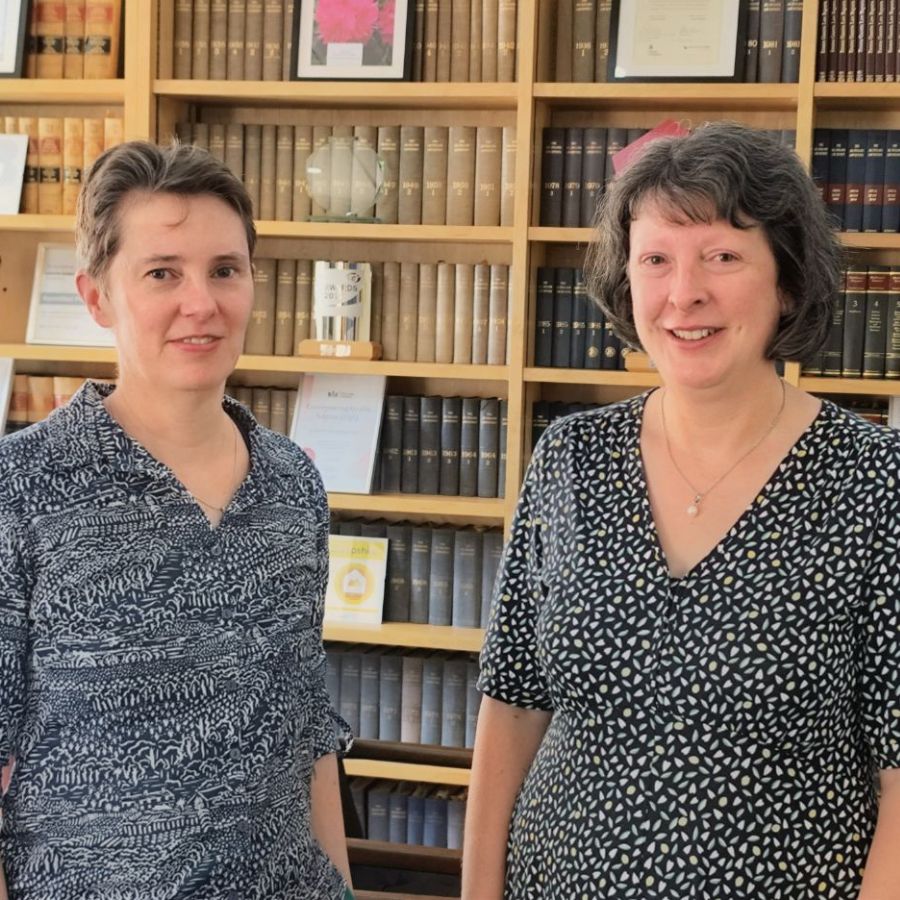
Emma-Kate Lanyon
Emma-Kate is the Head of Collections & Curatorial Services at Shropshire Council – which runs the Shrewsbury Museum.
Shrewsbury Museum & Art Gallery (SM&AG) sits proudly in the town square and is the county’s flagship museum and art gallery. Visitors will find a full programme of activities including courses, workshops for schools, weekly toddler groups, holiday activities and one-off incredible events inspired by our temporary exhibitions programme.
Podcast transcription
[00:00:00 – 00:00:13] Introducer: This is the Legal Lounge from Lanyon Bowdler Solicitors, where you’ll hear about many aspects of law in England and Wales, with special guests, industry experts and local charities. Here’s your host, Amanda Jones.
[00:00:13 – 00:00:50] Amanda: Hello and welcome to The Legal Lounge where we now release new episodes every Monday.
[00:00:51 – 00:01:16] Claire: Well hello to Emma-Kate Lanyon who’s the curator of Shropshire Museums. Nice to meet you. We’re here this morning to talk about an exciting relatively new discovery and a morning ring, the Corbet ring that is going on display or has just gone on display at Shrewsbury Museum. Would you like to tell me a little bit more about the Corbet ring, what it is?
[00:01:15 – 00:02:08] Emma-Kate: Well, thanks for having me. It’s lovely to be here today. And it’s great to talk about this really exciting find. We’re calling it the Corbet Ring. It’s a mourning ring when it was made in the 17th century. It was quite common for people to commission these rings as part of their kind of last will and testament. They would state that they were leaving a sum of money to make mourning rings for their relatives. And the idea was to present to your family members. was a gift that would encourage them to remember where their inheritance came from. So it was about making sure that you were not forgotten. Morning rings were part of a kind of a long history of kind of death-related jewellery. So in medieval period you have memento mori rings which were about remembering that kind of death was always there lurking behind your shoulder and think about the afterlife.
[00:02:07 – 00:02:15] Emma-Kate: But as I said in the 17th century, these kind of morphed into a personal gift, something that was actually connected with a person.
[00:02:14 – 00:02:22] Claire: And I suppose at that time, you wouldn’t have had photographs, you know, to look at of the deceased person, would you?
[00:02:21 – 00:02:22] Emma-Kate: Yes.
[00:02:21 – 00:02:35] Claire: So, you know, or possibly even a painting, but something like a morning ring might be something that you could wear and, you know, look at on a daily basis and remember the… The person who’s died.
[00:02:35 – 00:03:01] Emma-Kate: Yes, I mean, they really were that kind of that little sort of thing that you could keep with you as a reminder of that person. And in fact, when you look at 17th century paintings of women, you quite often see not only are they wearing these mourning rings, but you sometimes see them tied to their costume with a little bit of black thread. If you didn’t have enough fingers for the number of relatives who had died, you would actually. would actually attach them to your clothing
[00:03:00 – 00:03:01] Claire: Yes.
[00:03:00 – 00:03:06] Emma-Kate: so it was always with you as a kind of mark of that person yes
[00:03:05 – 00:03:14] Claire: And were they quite common or, you know, was it sort of more the more well-to-do families that could perhaps afford to have a ring commissioned?
[00:03:14 – 00:03:28] Emma-Kate: I mean this was something that kind of yeah the wealthy could afford to do this one in particular as soon as I saw it I knew this was someone of really high status who would have have the clout to commission something as gorgeous as this ring yes
[00:03:27 – 00:03:32] Claire: Just give us a little description of what the ring looks like and what it’s made of.
[00:03:32 – 00:04:29] Emma-Kate: well it’s gold it’s a circular kind of d-shaped band and around the outside of the band they’ve etched in these little flowers and leaves and at one point there’s a little skull that you can just about make out this sort of little teeth and and the eye socket kit so just again as a reminder that this is a morning ring and then what they’ve done is they’ve actually enamelled around this decoration so they’ve infilled it with black enamel just to sort of provide some contrast between the design and the background of the ring and then inside the band there’s this little inscribed inscription which has the initials vc and then ob which stands for a bit so died 4th of feb At 80. So knowing the period that this ring came from, we knew that the individual that this ring related to had died in 1680. It was a case of let’s see if we can work out who the VC might be.
[00:04:28 – 00:04:44] Claire: That’s amazing, isn’t it? Because I suppose with that engraving inside the ring, I don’t know how common that was either. You wouldn’t have been able to find out who it had belonged to or at least who it… related to the person who died.
[00:04:43 – 00:05:28] Emma-Kate: Yes, I mean, there are sort of two types. You sometimes get these kind of inscriptions that relate to the person, but you only ever get initials. And usually there’s no way you’re going to work out who it was from just the initials. Sometimes it has some little kind of motif type inscription. So they’re part of a class of ring called posies rings. And these are often given as love tokens and you often get some sort of little Elizabethan verse line to do with kind of affection and love, which is quite nice sometimes. But when I saw the quality of this ring, I thought, well, a C has got to stand for quite an important Shropshire family. And of course, Corbet was the family that sprung to mind immediately.
[00:05:36 – 00:05:59] Emma-Kate: Well, I knew there were a number of Vincent Corbet’s in the family. I looked up the death records and then it popped up the second baronet Vincent Corbet died on the 4th of Feb 1680. So smack on the date in the ring, he died of smallpox in London. That was just a fantastic moment to actually realise, yes. Yes, we’ve actually got a person that’s
[00:05:58 – 00:06:00] Claire: Yeah.
[00:05:59 – 00:06:03] Emma-Kate: who actually commissioned this ring. We know who it was.
[00:06:02 – 00:06:07] Claire: Yes. Then I think he was fairly young, wasn’t he, when he died? 38?
[00:06:07 – 00:06:41] Emma-Kate: Yes, yeah. Well, it’s quite sad. I mean, I think Vincent Corbet was a bit of a kind of unfortunate name to be given because his father, the first baronet who was also Vincent Corbet, died quite young. He was a royalist during the Civil War. And of course, when the Commonwealth came along, he had a lot of his fortune taken away from him. He died quite young. Vincent inherited the title when he was only 14 and then his own son, Vincent Corbet, died when he was at university. So it’s quite tragic
[00:06:41 – 00:06:46] Emma-Kate: that all these individuals passed away quite young.
[00:06:46 – 00:06:49] Claire: how did the ring come to be discovered?
[00:06:49 – 00:07:38] Emma-Kate: Well, it was found by a chap, Michael Chetwood, who’s a metal detectorist. He detects regularly in Shropshire. He’s one of our responsible detectorists that brings his finds into the museum and reports them with a portable antiquity scheme. As a kind of responsible, unexperienced detectorist, he realised as it was a gold object, it would be covered by the Treasure Act. So there’s a legal responsibility then if you find something. something that either a group of coins or precious metal to report that to the coroner. So our portable antiquities officer who works with us recording archaeological finds assisted him to do that, took him through the process and then anything that’s classed as treasure museums get the opportunity to purchase. Having done the research on this ring we felt it was a really important Shropshire find so we said yes we’d love to. love to purchase it and then set about trying to raise the funds to do
[00:07:44 – 00:07:49] Claire: And the ring is currently on display in Shrewsbury Museum, is that right?
[00:07:49 – 00:07:59] Emma-Kate: is yes it’s on display in our 17th century gallery now along with some of these other posy rings and these love token rings that are in the collection yes
[00:07:58 – 00:08:05] Claire: And I understand that Lanyon Bowdler will help the museum to purchase the ring.
[00:08:05 – 00:08:30] Emma-Kate: yes I mean we don’t We have a purchase fund within the museum service, so anything that we want to acquire we have to go out and fundraise for. Lanyon Bowdler very kindly supported the acquisition of this ring, but we have other funders like the Friends of the Museum and charitable trusts that help us to make sure these things stay in the public domain for people to see and join research.
[00:08:30 – 00:08:38] Claire: And I understand that you might have some other things related to this. To the Corbet family in the museum as well, do you want to?
[00:08:37 – 00:09:16] Emma-Kate: Yeah, we have the Corbet bed, which is one of our star items in our Tudor gallery that was commissioned by Richard Corbet, who served under Elizabeth I. That’s how he kind of made his fortune. And he actually rebuilt Morton Corbet Castle to be the Elizabeth. Elizabethan manor house that it was he commissioned the Corbet bed to go in this beautiful new house the house that later became Vincent Corbet’s home so Vincent may even have slept in the Corbet bed at some point so there’s a whole wealth of objects in the collection that connect to the family yes
[00:09:15 – 00:09:19] Claire: and the bed’s even older than the ring by the sound of it
[00:09:19 – 00:09:29] Emma-Kate: it dates from 1593 so it’s a fabulous item that that the Victorian Albert Museum kindly loaned to us to display.
[00:09:28 – 00:09:38] Claire: Very interesting. Interesting to hear that a metal detectorist had discovered the ring. That must have been quite exciting for him to have a find like that.
[00:09:37 – 00:10:19] Emma-Kate: Yes, I mean, finders are always really excited when they find something of gold, but what’s great with the Portobello Antiquity Scheme is that professional archaeologists look at these things and give them a report. report describing exactly what it is and what its significance is and that happens not just for treasure items people can bring in any archaeological find and we’ll do an identification for them and there’s a national database called the Portable Antiquity Scheme database and that records all these finds so there’s over a million items listed on that database now so it’s a great way to find out. out about archaeology in Shropshire and some of the amazing things that are found here.
[00:10:18 – 00:10:33] Claire: Yes, yes. And in terms of the engraving in the ring, I think there’s a cartouche to do with the person who’d actually, well, I don’t know whether they’d made the ring or whether they’d just done the engraving, maybe both.
[00:10:33 – 00:10:44] Emma-Kate: yes. I’ve been trying to find out who the maker is and I haven’t actually managed to narrow that. Write that down, yeah. Been going through all the goldsmiths in Shrewsbury and working my way out. These things, they can sit in the collection for 20 to 100 years. We’re always researching them. So one day, hopefully, we’ll actually be able to tie that down to actually the maker.
[00:10:54 – 00:11:00] Claire: And I suppose that the ring sort of predates hallmarking of jewellery,
[00:10:59 – 00:11:01] Emma-Kate: Yes. Yeah.
[00:11:00 – 00:11:04] Claire: so you haven’t got that reference to use.
[00:11:03 – 00:11:17] Emma-Kate: No, and it depends on where… on whether other items have been tied back to that maker so that they know who the person is for that maker’s mark so it may remain a mystery but we’ll keep trying we’ll see what we can find just
[00:11:16 – 00:11:25] Claire: on Vincent Corbet who you’ve talked about whose death the ring commemorates can you just give us a bit more information about him
[00:11:24 – 00:12:34] Emma-Kate: I mean he inherited the title when he was 14 his inheritance was kind of very impoverished because his father had been fined for his support for the crown and he was given a guardian Francis Thorne to manage the estate for him because he was so young unfortunately Francis saw this as an opportunity to make good he kind of milked the estate for whatever he could and then as soon as Vincent came of age he married him to his daughter to try and keep it all in the family he had quite a quite a sad childhood, I think. But then when Charles II came to the throne with the Restoration, his fortunes changed. Charles remembered his father’s support for the crown and gave him a number of prominent positions. So he was captain of the militia for Shropshire. He was commissioner for assessment and commissioner for recusance. So he had some quite important roles in the county during his life. And then eventually in… In 1679, he became an MP for Shropshire. But as we said, yeah, then he died at 38. So some of that kind of potential was never realised.
[00:12:33 – 00:12:37] Claire: No, and I think he died in London, didn’t he as well?
[00:12:36 – 00:12:45] Emma-Kate: He did, yes. I mean, he would have spent quite a lot of his time kind of at court and parliament and then coming back to the county when he could, yeah.
[00:12:44 – 00:12:49] Claire: Yes, and you say that the ring’s on display with some other rings, posy rings.
[00:12:48 – 00:12:50] Emma-Kate: Yes. Yes.
[00:12:49 – 00:12:51] Claire: What are they?
[00:12:50 – 00:13:11] Emma-Kate: Well, I love posy rings. I mean, they’re very similar. They’re gold band rings that are engraved, but these ones tend to be enamelled in lots of nice bright colours. So these were love tokens. And what I love is the little inscriptions inside give you a glimpse into that relationship maybe by which motto they chose.
[00:13:10 – 00:13:14] Claire: They sound like an early engagement ring type thing.
[00:13:13 – 00:13:25] Emma-Kate: Yeah, there’s one that I love. Love that was found at Wattlesborough Castle, which the inscription inside of it says maids must say no, which I think was very strong advice given to someone.
[00:13:25 – 00:13:28] Claire: So where was the ring found?
[00:13:28 – 00:13:52] Emma-Kate: It was actually found in Hordley Parish, which was a really interesting extra clue to the history of the ring because we know that Vincent’s only child to survive. Beatrice married John Kynaston from Hordley, so it’s likely that the ring actually belonged to Beatrice and she lost it on her new estate.
[00:13:54 – 00:14:09] Emma-Kate: But that makes the ring doubly exciting because not only do we know who commissioned it and who the VC is, we’ve got a very good idea of actually who it was commissioned for. So that just really… really sort of ties up the story beautifully.
[00:14:08 – 00:14:20] Claire: Yes, that’s amazing. Anyone that wants to go and view the wing for themselves, they can go and do that. And I understand that people can go and look at it for free. Is that right?
[00:14:19 – 00:14:39] Emma-Kate: Yes, yeah, access to Shrewsbury Museum and Art Gallery is free. So it’s one of the many treasures, there’s sort of a thousand objects that tell the story of Shropshire right from its geological past. stuck to the present day. Yes, it’s in our 17th century gallery, along with some other amazing objects from the county.
[00:14:38 – 00:14:44] Claire: I shall be going along to have a look shortly, it sounds really interesting. Thank you.
[00:14:43 – 00:15:00] Amanda: Thank you to Claire and to our special guest Emma Kate. If you have a legal issue you’d like me to put to our team to cover in an upcoming episode, please let me know by visiting lblaw.co.uk forward slash knowledge where you can search for all our podcasts. That’s lblaw.co.uk forward slash knowledge.