
 Back
Back


About this episode
Exploring the YESS Foundation: Empowering Young Entrepreneurs
In this episode, David Pugh is joined by Richard Charles from Action Coach to discuss the YESS Foundation, an educational programme designed for young people aged 12 to 22. The foundation aims to equip participants with essential life skills and entrepreneurial knowledge, addressing gaps in traditional education that often leave young individuals unprepared for real-world challenges.
Richard elaborates on the structure of the programme, which spans 17 weeks and is completely free for participants. With modules focusing on self-discovery, goal setting, and personal wealth creation, the YESS Foundation seeks to instil self-belief and confidence in young people, ultimately preparing them for both entrepreneurial ventures and fulfilling careers as employees. For more information, visit yessfoundation.org.uk.


In this episode
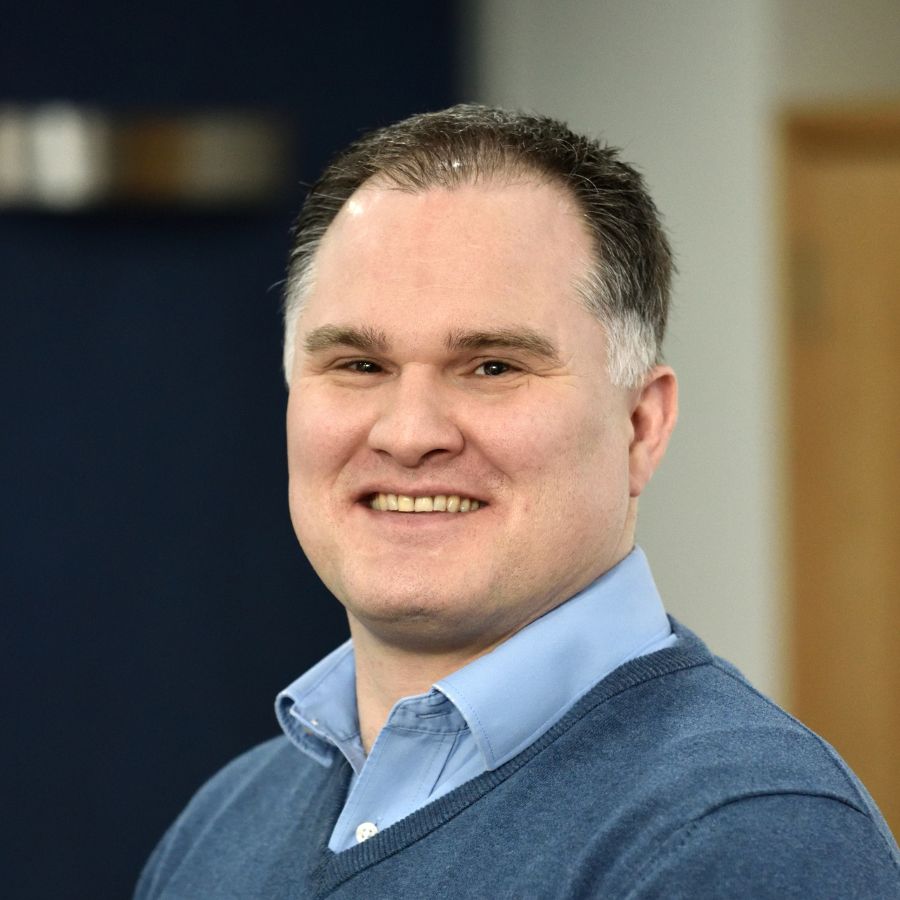
David Pugh
David has been recognised as a Recommended Lawyer in the 2026 edition of Legal 500 for personal tax, trusts & probate as well as agriculture & estates. The directory states: ‘David Pugh in Shrewsbury handles a variety of matters including the preparation of wills encompassing business and agricultural property relief.’
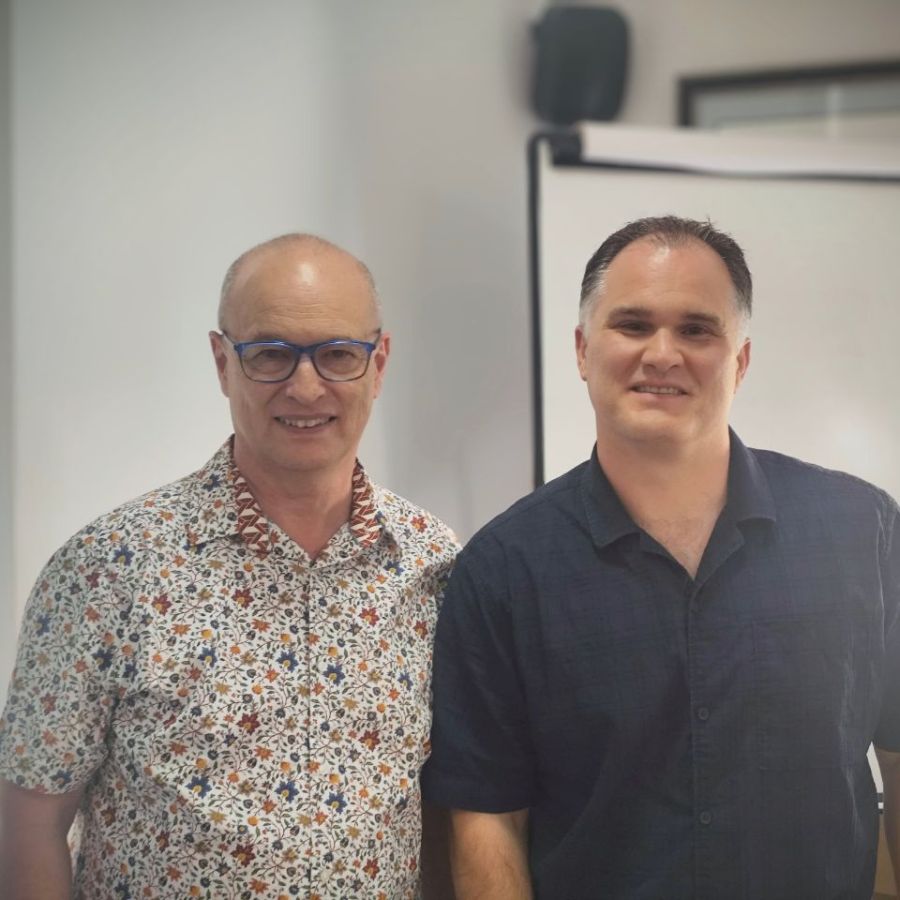
Richard Charles
Richard is an award-winning Action Coach who coaches his clients to become award winners too. He has worked with businesses in a variety of sectors such as engineering and legal.
Transcript
[00:00:00 – 00:00:13] Introducer: This is the legal lounge from Lanyon Bowdler Solicitors, where you’ll hear about many aspects of law in England and Wales with special guests, industry experts and local charities. Here’s your host, Amanda Jones.
[00:00:13 – 00:00:54] Amanda: Hello and welcome to the Legal Lounge where we now release new episodes every Monday.
[00:00:54 – 00:01:20] David: Today, I’m once again joined by Richard Charles from Action Coach, but this time Richard is meeting with me to talk about the Yes Foundation, that is Y-E-S-S, standing for Young Entrepreneur Smart Start. This is an education programme for young people between the ages of 12 and 22. So Richard, this is about education, so can you tell us a little more?
[00:01:19 – 00:01:54] Richard: Sure. Thanks, David. Yeah, what we’re going to… which can talk about today’s fits really well with what Lanyan Bowdler is very active in already, that is providing work experience, going out to schools, getting involved in developing future leaders, supporting education in various ways, and of course with this trainee solicitors programme. So what we’re looking at with the Yes Foundation, if I can ask you Dave to think back when you were at school, particularly high school, and if I ask you a bit of a bombshell question, Michelle questioned, what did they teach you that was actually useful in day-to-day life?
[00:01:53 – 00:02:12] David: I don’t know if I could necessarily broadcast what I thought about some of that. I suppose there was a few skills, but when you look at it, no, it was all about achieving the grade. So, you know, realistically, probably not as much as I would maybe want or would be as useful for me now.
[00:02:11 – 00:02:15] Richard: That sounds great. I think a lot of people would resonate with that.
[00:02:14 – 00:05:57] Richard: Yes, English language, of course, very important. A lot of other things that we learned had their use, of course. We were taught a lot of things that we don’t really need. My daughter’s just done her GCSEs and she said, Dad, will I really use Pythagoras’s theorem when I get a job? And of course, the answer to that is, well, unless you’re an engineer or scientist, the answer is probably not. It doesn’t have much use in day to day. they work kind of makes us wonder what what is the education system set up to do why was it set up in the first place well of course it was built in the 1800s particularly from 1830 onwards to be able to fill the factories with employees it was set up to create employees and the idea of clocking in at a certain time clocking out studying very set subjects building people’s abilities around a very set curriculum. But of course, it was teaching compliance much more than creativity. So the purpose of the education system is to create people to work in jobs. Now, that’s fine. And of course, it’s developed over many decades, influenced by particular acts of parliament and the policies of various governments over the years. But that’s what it’s set up to do. set up to get people through exams rather than teach life skills so much so for example I loved history and I learned things like you know the Battle of Waterloo and what Henry VIII did with his wives but how does that really benefit me It doesn’t really, not in day-to-day living. Yes, of course, what we learn can spark ideas and can lead people to become scientists if they’ve learned chemistry, physics and biology, all those kind of things. But in the grand scheme of things, we learn a lot of stuff that we never really use. And at the same time, there’s a lot of things that we could be taught that we’re not taught. We’re not taught credit management, for example. I wasn’t in my mid-twenties, I finally learned what a mortgage was. There’s so many skills around money, around developing ourselves that we’re simply not taught in school. And the other challenge that we’ve got going on is what’s sometimes referred to in the news at the moment as the lost generation. It’s known as NEET, N-double-E-T, standing for not in employment, education or training. meaning. And stats vary, but it’s looking like around a million or so young people that are not in employment, education or training. And that looks like it may grow to 1.25 million by 2030. So we’ve got this huge number of young people that are kind of drifting that don’t know what to do. And if there’s one thing that they all lack, it’s self-belief, belief in themselves that they can actually go on. They go on to do things because things like that are not taught in school, sadly. It raises the question, what if there was a programme that was there for young people, particularly young people that don’t really seem to fit into the education system, perhaps through neurodivergence or perhaps because they just don’t get the framework of living a life that is so rigid according to clocking in and clocking out. So many highly successful people have been found to be neurodivergent. Think of Richard Branson’s dyslexic. Others have the entrepreneurial flair, but just don’t know what to do next. Don’t know where to go to learn about how to be entrepreneurs. And the Yes programme, Young Entrepreneur Smart Start, is set up, is designed exactly for these type of children students between the ages of gives us 12 and 22.
[00:05:56 – 00:06:10] David: So that’s all very well and good for modern entrepreneurs, but what about those young people who do just prefer to be employees that just want to get on with things as it seems to be?
[00:06:09 – 00:06:51] Richard: Exactly, yes. And their role in society, of course, is so important, isn’t it? For yourself, you went through the education system, onto university, now you’re a highly successful solicitor. We have to cater for them as well. And the great thing about the yes. Yes, programme. Although it seems set up for young entrepreneurs, it’s perfect for employees as well. Why? Well, just look at the modules. Look at the first one, discovering who you are, achieving long-term goals, creating the life of your dreams. Another module, creating personal wealth, launching your legacy. These are things that we cover in the Yes programme that are just as suitable for employees. youth as well as for entrepreneurs.
[00:06:51 – 00:06:56] David: Within, yes, what’s your actual role, Richard? What do you do yourself?
[00:06:55 – 00:07:12] Richard: We have facilitators. The facilitators are the people that do the actual coaching for the students and my role is to coach some of the facilitators. So the things that they’ll be helping the young people with, that’s what I’m coaching the facilitators on.
[00:07:11 – 00:07:22] David: So you’ve given us an idea of a few of the modules. that are within the course, but what does the course itself actually look like for those young people that are involved?
[00:07:21 – 00:07:49] Richard: The first thing to state is that it’s completely free for young people. There’s no cost at all. So whatever the age between 12 and 22, it’s there, it’s gifted. The course itself is stretched out over 17 weeks and the commitment really is about two, two and a half hours a week. week. And what does that involve? Well, one of those hours is a video provided by Brad Chuggers. You’ve been to see Brad Chuggers,
[00:07:48 – 00:07:56] Richard: I have. understand. So you’ll know this extremely dynamic, very knowledgeable, but he’s got everything there to help young people
[00:07:55 – 00:07:56] David: Yes,
[00:07:55 – 00:07:57] Richard: do it.
[00:07:56 – 00:07:58] David: certainly engage with
[00:07:57 – 00:07:58] Richard: Fantastic.
[00:07:57 – 00:07:59] David: them, certainly.
[00:07:58 – 00:08:41] Richard: There’s a one hour session each week with Brad, Brad’s video there. Brad’s the founder of Modern Business Coaching and the information, the content there is really, really world class. The second hour is a group session with other young people within the same sort of age bracket, obviously doing mixed 12 year olds or 22 year olds. It’s divided into age appropriate content and speed for the young people. So a group coaching session with a facilitator for one hour a week and the other half an hour is to do a bit of research. and some quizzes, some assignments that are included as well. So we’re looking at around two and a half hours a week over 17 weeks.
[00:08:40 – 00:08:47] David: What’s the credentials for the foundation? What actually do you get out of this?
[00:08:46 – 00:09:23] Richard: The foundation is a registered charity. It’s also a Duke of Edinburgh skill activity, so it fits in nicely with that and it also supports the Gatsby. Gatsby Benchmarks numbers two, three, four, five, seven and eight. So it’s set up to support other educational arrangements in that way. In terms of what we’ve achieved so far, we’ve had 350 young people go through the Yes programme. That’s just in the UK. It’s a worldwide programme. We’re particularly promoting it in the UK, of course, and we’ve had 350 young people go through so far. So
[00:09:22 – 00:09:30] David: So with those young people taking it up, are they individuals or are you having schools or other organisations getting involved?
[00:09:30 – 00:09:56] Richard: most are individuals scattered around the country, of course, but we have had our first school take this up and that’s St Margaret’s in Hampstead in London and they’ve incorporated the yes programme into their curriculum as of September this year. So we’re really, really excited to have that. After that’s established, we’re talking to several other schools to see about getting into their curriculum as well.
[00:09:55 – 00:10:01] David: So who else should contact the organisation or who else should really be looking at this?
[00:10:00 – 00:10:40] Richard: Yeah, good question. Aside from school governors who we’d love to hear from, think of youth groups that are there to help young people. So much about the Yes programme is around our mindset, learning to… We keep the right thoughts in our heads and learning how to deal with the negative thoughts. So youth groups have a great opportunity here to help their young people that they are working with to really develop their thought processes. Same really goes for sports groups. You know, we’re talking about high achievement. It’s all there. So much of what we learn through the Yes programme serves athletes really well too. It’s all about high performance.
[00:10:39 – 00:10:44] David: And when they finish the course, when they get through it, what happens then?
[00:10:43 – 00:11:22] Richard: Each young entrepreneur will get a certificate. We have a ceremony for everyone receiving their certificate. Also access to a number of action coach resources, which are valued about £3,000. It’s a great opportunity. Also young people will get, that young people go through, particularly those that are looking to set up their own business, be it. Now or in the future, they’ll have access to a 90-day planning programme as well. That’s our quarterly programme. That will be available largely online for them. This is just a great opportunity to get the wheels in motion in whatever they want to do next.
[00:11:22 – 00:11:29] David: And what’s the ultimate vision for the foundation or what’s your take on the vision for the foundation?
[00:11:28 – 00:11:44] Richard: There’s such a need for this that we want to get as many young people going through as possible. So our vision really is to get a thousand young people through this every single month and to do that by the end of 2030.
[00:11:43 – 00:11:57] David: As you said, we’ve had 350 young people. that have gone through through the course from seeing the young people what has impressed you personally about the outcomes and what they’ve achieved going through the course
[00:11:56 – 00:14:04] Richard: I think a lot is in the manifesto that we put together. If I could just share a couple of points from it with you. We believe that every young person has potential far greater than they realise. And that’s not just a future thing. It’s not Sunday. It’s not when they’re older. older it’s right now and we believe that having self-confidence having self-belief is what can change lives passing exams is one thing but actually believing in themselves that’s quite another we believe that when a young person believes in themselves that’s when they really start to take action they ask questions they try new things they set bigger goals they learn to deal with rejection They learn to deal with making mistakes. They begin to see opportunities where others would just see obstacles. Too many young people are growing up believing that their future is limited by their circumstances, their grades, their background or the opinions of others. My daughter just said as I said just done her GCSEs she’s worried sick about whether she’s passed them or not. Now is that really what the education system has been? has built her up to in this moment. Is it really that? Well, what if it was greater things, what a real potential is, and that’s what the Yes programme is doing. It’s enabling young people to really believe in themselves and take those first steps. We had a graduation a few months ago up in Stoke-on-Trent and the awards were handed out by the mayor, it was really really great. We had some local business entrepreneurs that were sharing their journeys really really wonderful stuff going on. But one of the things that really touched me was the father of one of the graduates. He said, look, I wasn’t too keen on this because my son was struggling with his GCSEs and I didn’t want him to have to learn something else. But he really wanted to do this. But as a result of doing this, he’s taken his GCSEs much more seriously now. And I’m really, really pleased with that. So for me, that was one of the. the things that touched me the most it’s how it got that young person to think differently so that they could go on to achieve other things absolutely
[00:14:03 – 00:14:11] David: And it shows that it can work in conjunction with the more standardized schooling system, as you’ve spoken about.
[00:14:11 – 00:14:13] Richard: yes yes indeed for
[00:14:12 – 00:14:19] David: Where do I go or where does anybody go to try and get a bit more information about this, Richard?
[00:14:18 – 00:14:41] Richard: all young people that you know between 12 and 22 The place to go to is yesfoundation.org.uk. That’s y-e-s foundation.org.uk. Everything you need to know is on there, how to enroll. You can also reach out to our CEO, Denise Peters, who will answer any other questions that you might have.
[00:14:40 – 00:15:00] David: That’s some absolutely fantastic information about the Yes Foundation, Richard, and I would like to say. I was lucky I had great support from my parents, from my other family members, and I had good people around me. But even I can see that having something like this when I was, shall we say, much younger would have been.
[00:15:00 – 00:15:17] David: been a great support and would have been something I would have thoroughly enjoyed to do myself and learn from. For those that are listening, I would like to just remind you again, the website is the yesfoundation.org.uk. That’s yesfoundation.org.uk.
[00:15:17 – 00:15:36] Amanda: Thank you to David and to our special guest, Richard. If you have a legal issue you’d like me to put to our team to cover in an upcoming episode, please let me know by visiting lblaw.co.uk forward slash knowledge, where you can search for all our podcasts. That’s lblaw.co.uk forward slash knowledge.
[00:15:35 – 00:15:40] Introducer: That was the legal lounge from Lanyon Bowdler solicitors
Our Podcasts
We record a variety of podcasts, lots to do with the law and working in a law firm. We also have a number of episodes where we speak with charities and those involved in community events.
Our mini series ‘Grounded in Agriculture’ introduces dispute resolution solicitor Katie Baker who talks with those working in the farming and growing sector, listening to their challenges, but also celebrating their amazing achievements.
If you have a topic you’d like us to consider covering, just send us a message via our online form.
Our legal teams are accessible to those living in North Wales, Shropshire and Herefordshire, and are able to offer meetings via video, meaning we can support and advise you wherever you’re living in England or Wales.
Our awards and accolades.



Get in touch.

"*" indicates required fields